
Considering polynucleotides for a fresher, better-recovered skin and want to know what happens before and after the treatment? You're in the right place. Polynucleotides don't work like a filler that adds volume; they are a biostimulator that improves your skin quality from within. On this page, you'll get honest insight into what to know beforehand, how a session goes, how your skin looks right after, and when you'll see the real result. So you know exactly what to expect before booking an appointment.
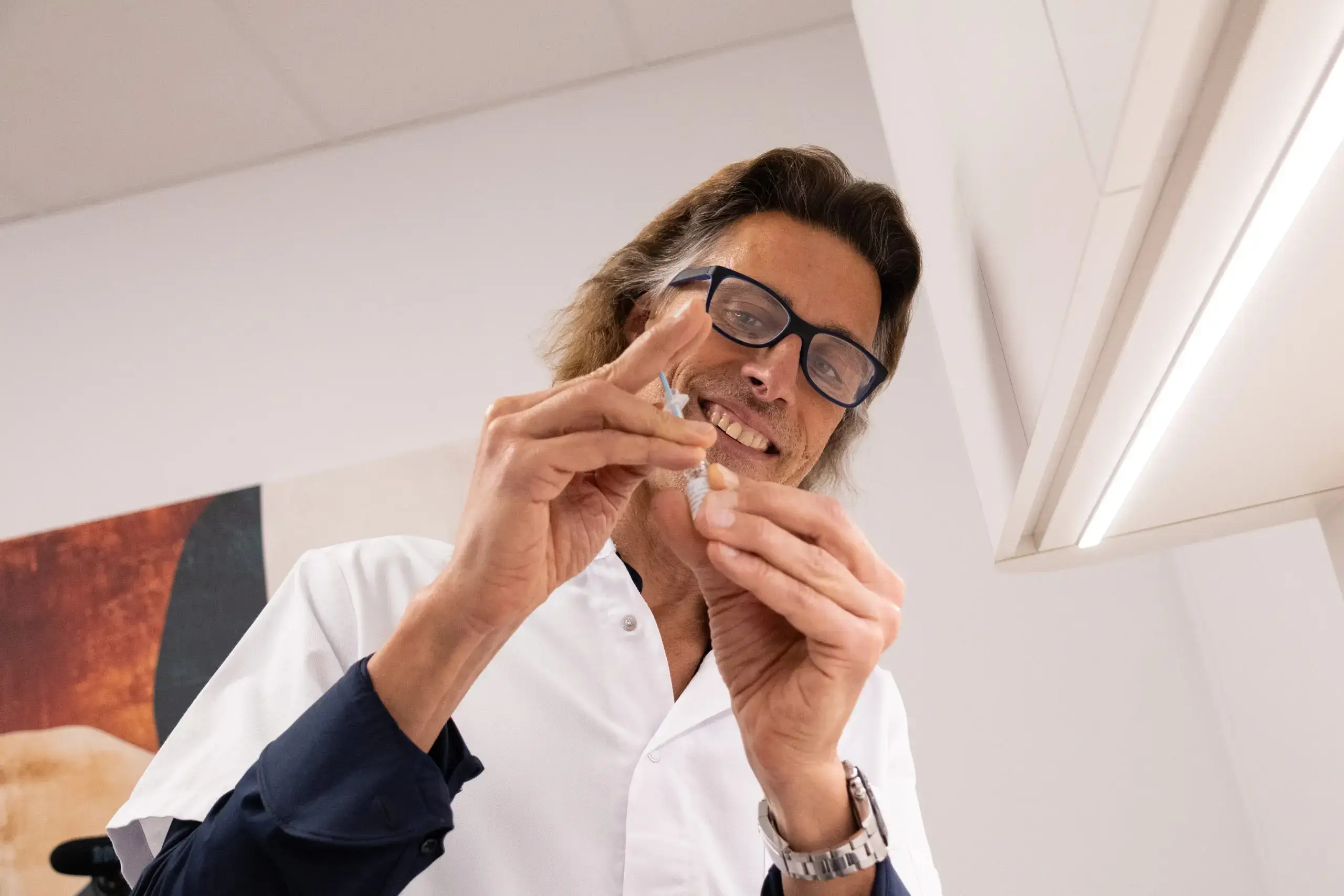
Polynucleotides are purified DNA fragments that are injected into the skin to trigger your own repair processes. They don't provide immediate volume, but improve your skin quality: better hydration from within, a firmer and smoother surface, and a gradually fresher appearance. That's why we call them a biostimulator, not a classic filler.
The substance stimulates your skin cells to function better and supports natural repair. This makes polynucleotides especially suitable for fine, thin, or tired skin, for example around the eyes, on the neck, or on the face. The result is subtle and respectful: your skin looks healthier, not altered.
Because the effect builds from within, it's important to have realistic expectations. You're not buying an instant transformation, but a gradual improvement of your skin quality over several weeks.
This treatment suits those who want to improve their skin quality: a tired eye contour, a delicate neck, or a dull, dry skin lacking some resilience. Polynucleotides can also be a great addition alongside other treatments, as a buildup or maintenance.
Polynucleotides are not the right choice if you're mainly looking for volume or a clear contour. Fillers or other biostimulators are more appropriate for that. During a consultation, we honestly assess whether this truly fits your skin and goals, or if another approach makes more sense.
In some situations, we advise against the treatment or postpone it, for instance in case of an active skin infection or inflammation in the treatment area, or with a known hypersensitivity to the ingredients. During pregnancy or breastfeeding, we never treat. We make that assessment together, with safety always as the priority.
We always start with a conversation about what bothers you and what you hope to achieve. Dr T. assesses your skin, explains what polynucleotides can and cannot do, and together we decide if a treatment makes sense. Only then do we agree on a plan.
During the session, the product is distributed in the treatment area with fine needles or micro-injections. The pricks are usually well tolerated. A session typically doesn't take long, and you can go home afterward.
We often work with a course of multiple sessions, spaced a few weeks apart, because the skin builds the effect step by step. How many sessions make sense for you is honestly discussed during the consultation.
Right after the treatment, you may have small bumps, slight redness, or sensitive skin at the injection points. That's normal and part of how the product is administered. In sensitive areas like the eye contour, some swelling or a bruise may appear, which will fade on its own.
So in the first days after treatment, you mainly see the healing of the pricks, not yet the final result. Many people notice after a few weeks that the skin feels fresher, smoother, and better hydrated. The real effect continues to build as you complete the course.
The result of polynucleotides is gradual and natural, and it lasts for a while, but it's not permanent. Maintenance sessions help preserve the improved skin quality. We'll honestly explain what's realistic for your skin during an appointment.
Beforehand, we ask you to keep the skin in the treatment area healthy and intact, and to use blood-thinning medications or supplements only in consultation with your doctor, as they can increase the risk of bruising. Come to your appointment with clean, untreated skin.
For the first few hours, it's best to leave the injection sites alone and touch them as little as possible. For the first day or two, avoid intense exercise, sauna, steam rooms, and strong heat, and don't expose the skin to bright sun. Make-up on the treated area is best postponed for a while.
Carefully follow the advice you receive after the treatment. If you have doubts about your recovery or see something you don't trust, don't hesitate to contact us so we can take a look.
Polynucleotides have a well-tolerated profile, but as with any injection, temporary reactions are possible: redness, swelling, tenderness, or a bruise at the injection site. These are usually mild and short-lived. Serious reactions are rare; we honestly discuss potential risks beforehand and ensure a safe procedure.
The price of a polynucleotide treatment depends on the treatment area, the number of sessions, and what your skin needs. That's why we don't give a fixed price beforehand: during the consultation, you'll receive an honest and clear estimate tailored to your situation.
Would you like to know what polynucleotides can do for your skin and what you can realistically expect before and after? Then book a consultation with Dr T. in Ghent. Together, we'll see if this treatment suits you, or if another approach is better.

Just like Sculptra, polynucleotides belong to the biostimulators, while Radiesse is a biostimulating filler: all three trigger your skin to firm itself. Yet they differ in approach. Sculptra (poly-L-lactic acid) primarily stimulates collagen production and is ideal for volume loss throughout the face. Radiesse (calcium hydroxylapatite) offers, besides collagen stimulation, an immediate lifting effect. Polynucleotides focus more on tissue repair and hydration at the cellular level; they improve skin quality, elasticity, and fine lines without actually adding volume. Where Sculptra and Radiesse excel in contours and deep folds, you choose polynucleotides for a fresher, more even skin texture and a natural glow. Often we combine them precisely for a complete rejuvenation plan that brings your face into balance.
 Best tear trough filler: subtly softening hollow, tired eyes
 Biostimulator
 Biostimulators at Dr T.: firmer skin with a natural look
 Biostimulating filler Radiesse
 Complications with Fillers: What You Need to Know, How to Recognize Them, and What to Do Immediately
 The best fillers for your face: how to choose with confidence