
Laughing is allowed, and the lines that come with it are fine to have. Yet some people prefer their laugh lines to be a bit softer, especially when they become deeper even at rest. On this page you can read about what's involved with laugh lines and what options are available. We honestly explain what botox and fillers do and don't do for laugh lines, who they're suitable for, and what you can realistically expect. The goal at Dr T. is always subtle and respectful: a fresh result that preserves your expression.
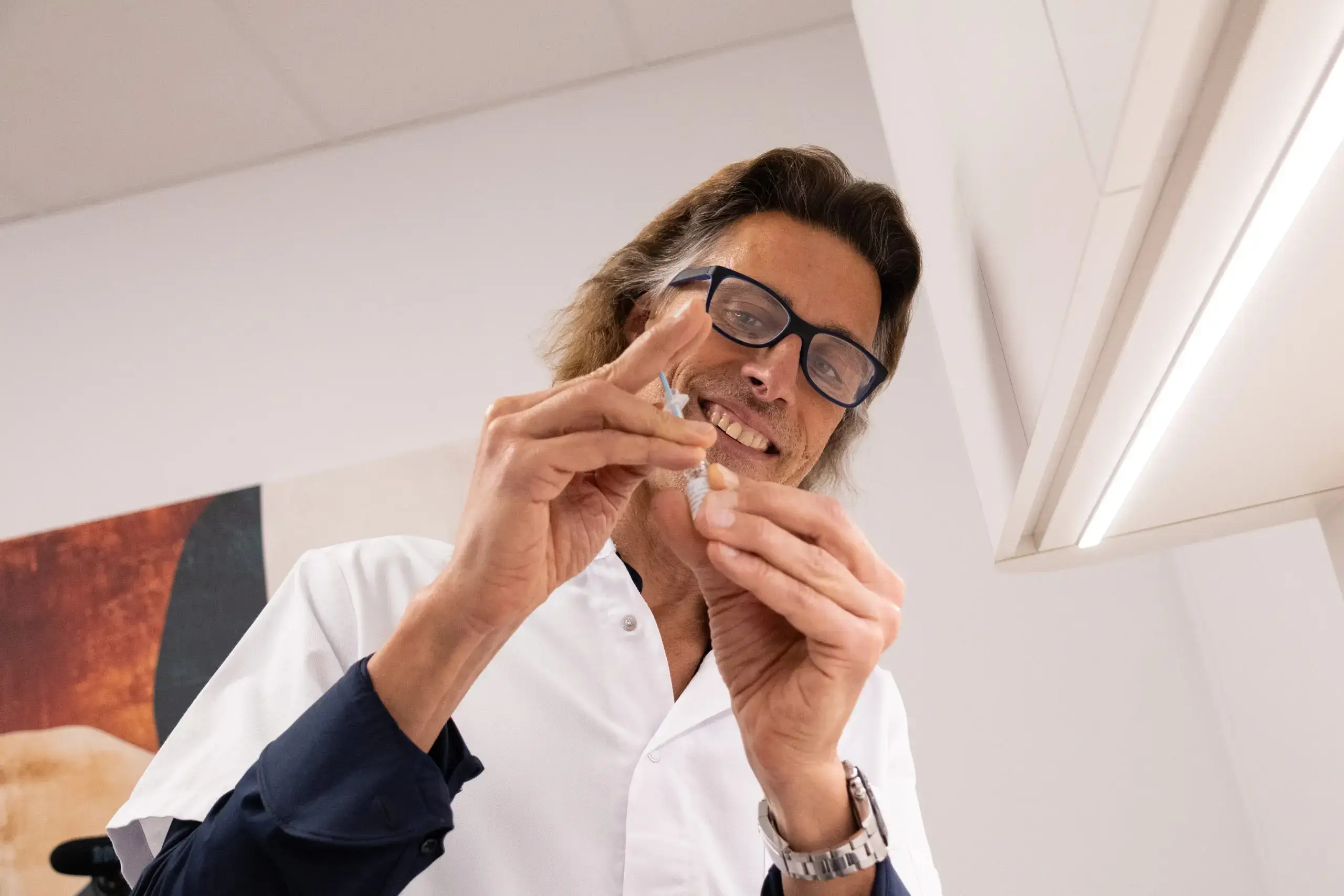
Laugh lines are the lines that appear when you laugh or make expressive facial movements. The best known are the fan-like lines at the corners of the eyes, the so-called crow's feet. The folds that run from your nose to the corners of your mouth and the lines around the mouth are often grouped under the same term.
Initially, you only see these wrinkles during movement. Over the years, the skin becomes thinner and loses elasticity and volume, making the lines visible even at rest. This is a normal part of aging and not a shortcoming.
Which approach suits you depends on the type of laugh line. Dynamic wrinkles require something different than wrinkles that are present at rest. That's why we first carefully examine your face before suggesting anything.
For crow's feet that mainly appear when laughing, botox is often the logical choice. It relaxes the muscle around your eye slightly, so the fan lines become softer. You can still laugh and look around normally; it's about refinement, not freezing.
Lines that are deep in the skin even at rest, or folds around the nose and mouth due to volume loss, respond better to a filler or a biostimulator. They fill or support the skin so the fold becomes less deep. Sometimes a combination of techniques is the most natural answer.
It's honest to say that no treatment can make every line completely disappear, especially superficial skin lines. The goal is softening and refreshing, not removing your expression.
A laugh line treatment is suitable for those who want their eye corners or mouth area to look fresher, while maintaining natural facial expressions. Realistic expectations are more important than a specific age: subtle adjustments give more beautiful results than trying to erase everything.
Sometimes we advise against an injectable. During pregnancy or breastfeeding, certain muscle or nerve disorders, an active infection or inflammation in the area, or an allergy to the products used, we don't do it. Also, if a line is primarily a skin issue, a different approach may be more logical.
Honest advice is part of respectful work. If a treatment would add little in your situation or isn't safe, we say so plainly, even if that means we don't inject anything.
Everything starts with a calm consultation. We look at your laugh lines together, ask about your wishes and medical history, and explain what is and isn't realistic. Only when you feel comfortable with the plan do we proceed.
The treatment itself is short. Using fine needles, we place small amounts of product in the right spots. Most people find this quite tolerable; for fillers, a product with anesthetic can be used for extra comfort.
Afterwards, you receive clear aftercare advice, for example about what to avoid that day. Where necessary, we schedule a check-up to review the result together.
With botox for crow's feet, you see the effect gradually appear in the days after treatment, with the full result typically after about two weeks. The effect is temporary and fades slowly, after which a repeat can maintain the result.
With fillers and biostimulators, there is often an immediate difference visible, though there may be some swelling initially. Biostimulators also work gradually further by stimulating the skin, so the result builds up over several weeks.
How long the effect lasts varies per person, per product, and per area. During your consultation we discuss a realistic picture for your situation, without making prettier promises than we can keep.
Treating laugh lines is generally safe in experienced hands, but there are always possible side effects. Think of short-lasting redness, a bruise, slight swelling, or tenderness at the injection sites. These are usually mild and transient.
Rarer reactions are possible, and that's why we take time for your medical screening and honestly discuss the risks beforehand. If you have any doubts after the treatment, you can come to us.
The price depends on the chosen technique, the area, and the amount of product needed. We don't work with surprises: during the consultation you receive an honest estimate that fits your personal plan. Want to know what's possible in your case? Feel free to book an appointment for personal advice.

Laugh lines are caused by repeated muscle movements, but slackened or thinner skin makes them more visible. With collagen-stimulating treatments such as PRP you strengthen the skin from within. Firmness gradually increases, so the lines around your eyes and cheeks become less deep without your facial expression becoming stiff.

