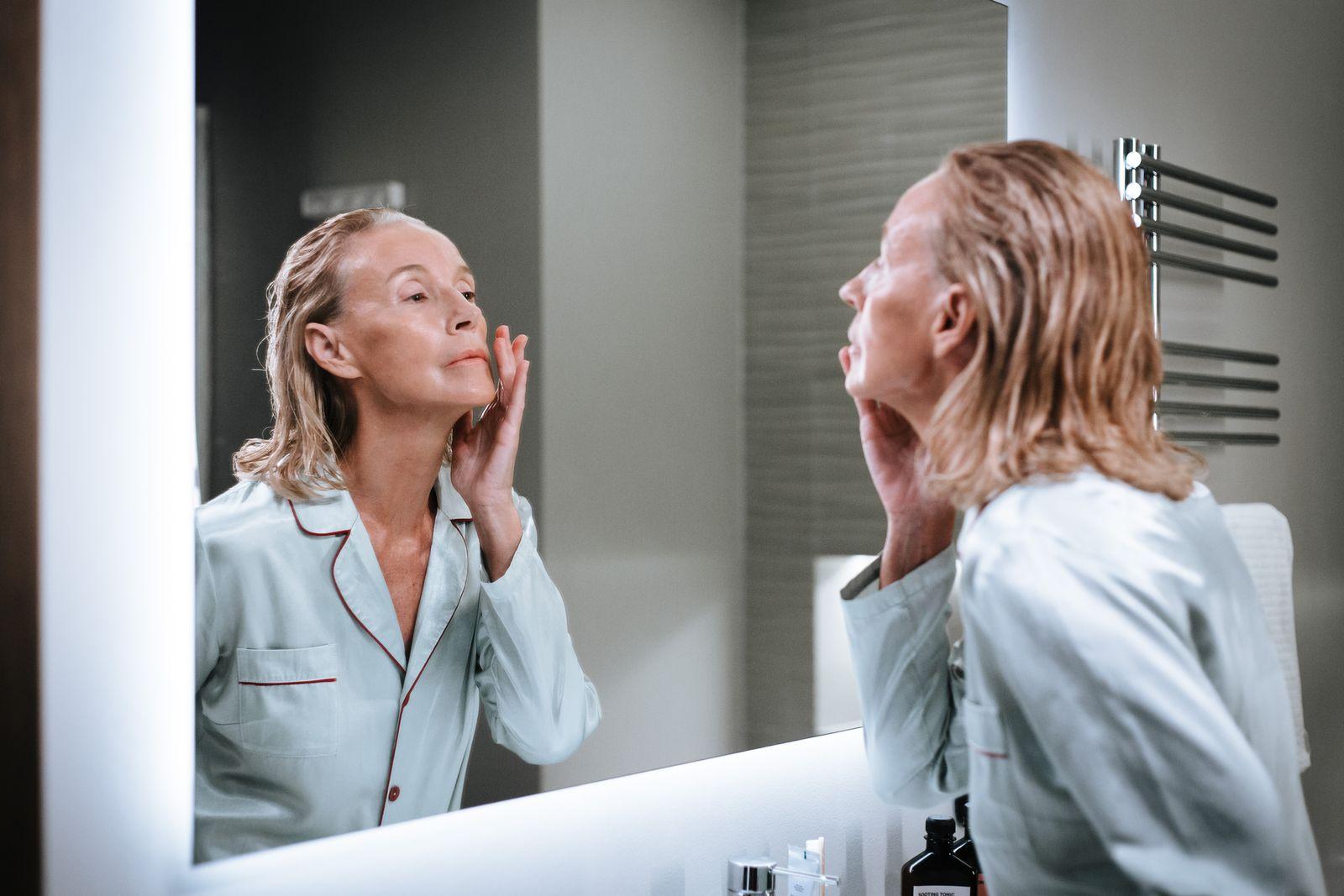
Have you noticed that your face used to look fuller, that the contours feel less firm, or that you look more tired than you actually feel? A face that 'sags' is a common but also well-understood change. It is related to loss of volume, collagen and elasticity, and it usually happens gradually. In this guide I explain what exactly occurs, which habits play a role, and which treatments can help refresh your face in a natural way. No promises, just honest information.
A sagging face is rarely the result of a single cause. It is an interplay of changes in the skin, the subcutaneous fat and the bone structure. As you age, your skin produces less collagen and elastin. As a result, it loses firmness and resilience. At the same time, the fatty tissue in the face shifts or diminishes, especially around the cheeks, temples and jawline. The bone structure also changes subtly, reducing the support for the skin.
The result is a tired, sometimes somewhat drooping appearance. You often notice it first in the nasolabial fold, the jawline or the area under the eyes. Important to know: this is a normal process. The pace differs per person, partly due to genetics, lifestyle and sun exposure.
Some factors are within your control. Smoking, for example, accelerates the breakdown of collagen and elastin, causing the skin to lose firmness more quickly. Excessive exposure to UV radiation also damages the skin structure. Weight fluctuations can affect the face as well: with weight loss, volume in the face often disappears too, which can give a sunken or older impression.
Sleep also plays a role. Chronic sleep deprivation can make the skin look duller and less elastic. A healthy lifestyle cannot stop the process, but it can slow it down. People who smoke, spend a lot of time in the sun without protection, or often experience large weight fluctuations usually notice the changes earlier.
There are several non-surgical treatments that can subtly firm the face or restore volume. Which approach is suitable depends on your face, your age and what you personally find important.
Hyaluronic acid fillers can replenish lost volume, for example in the cheekbones, the jawline or the nasolabial fold. They give an immediately visible effect, but the result is temporary. Biostimulating treatments such as Sculptra or Radiesse stimulate your own collagen production. Skinboosters such as Profhilo improve skin quality and hydration, which can make the skin look fuller and fresher. Muscle relaxants can help relax certain muscles that reinforce a drooping or tired expression, such as downturned mouth corners or a frown.
Each treatment has a different mechanism of action and a different result. That is why a personal assessment is important. What works for one person is not the best choice for another.
The choice depends on what you see yourself and what you want to achieve. If you mainly notice volume loss in the cheeks or under the eyes, fillers or a biostimulator such as Sculptra may be an option. If your main concern is skin quality and a dull, tired complexion, skinboosters or PRP are more interesting. If you mainly see a sagging jawline or a deep nasolabial fold, a combination of fillers and collagen stimulation can be useful.
Sometimes a surgical procedure such as a facelift is the only way to truly correct pronounced laxity. But for many people, a non-surgical approach is enough to look fresher and more natural, without the procedure being noticeable. During a consultation we look together at what is feasible and what suits your face. This way you avoid an exaggerated or unnatural result.
Besides treatments, there are daily habits that support your skin. Protect your skin from the sun every day, even in autumn and winter. A sunscreen with sufficient protection factor helps limit further collagen breakdown. A stable weight is also important, because fluctuations affect facial volume.
Good sleep, adequate hydration and a balanced diet with enough protein and antioxidants contribute to healthy skin. Smoking is strongly discouraged, because it accelerates skin ageing. These measures do not replace a treatment, but they do help maintain the result of a treatment longer and keep your skin in better condition.
If you notice that your face has sagged and you are concerned about it, a consultation is a good starting point. During a conversation we look at your face at rest and in motion, discuss your expectations and explain what options are available. You also receive honest information about what a treatment can and cannot do, and about possible risks and side effects.
The goal is to give you a clear picture of what is going on and what you might be able to do. This way you can decide with confidence whether and when you want a treatment.
A face that loses volume is not just a matter of the outer skin layer. Underneath the skin, fat compartments shift, bone density decreases and the production of collagen and elastin slows down. Together, these changes make contours softer and gravity more visible.
Collagen gives the skin structure, elastin keeps it supple. From early adulthood, natural production gradually declines. At the same time, the fat pads in the face become thinner and sink slightly. This creates that typical tired look, even when you are well rested.
You cannot stop that process, but you can slow it down. Sun protection remains the most important daily habit. Quitting smoking, getting enough sleep and a protein-rich diet also support the skin from within. Avoid large weight fluctuations, because they demand a lot from the elasticity.
Practical questions